Memory is essential to understand for pwning in CTFs. Here, I will try to explain the structure of memory and behaviors for beginners in pwn.
Definition of Memory
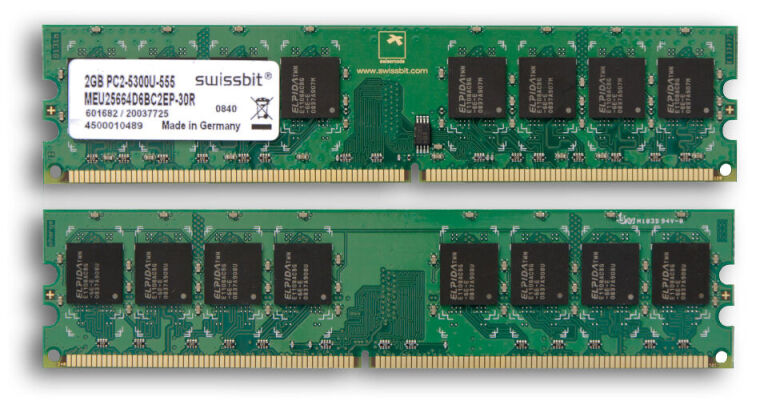
First, a basic definition of memory. Have you ever seen that long card in your computer with black squares on it? That’s memory. Most people (who watch Linus Tech Tips) know this as Random Access Memory (RAM), but at the core it is just temporary storage on your computer. RAM is immediately wiped after rebooting your computer, but is much faster than writing onto your SSD or hard drive. Functions that require temporary and fast speeds would use RAM; this includes caching websites, displaying text in a GUI, and loading chunks in games.
Memory Structure
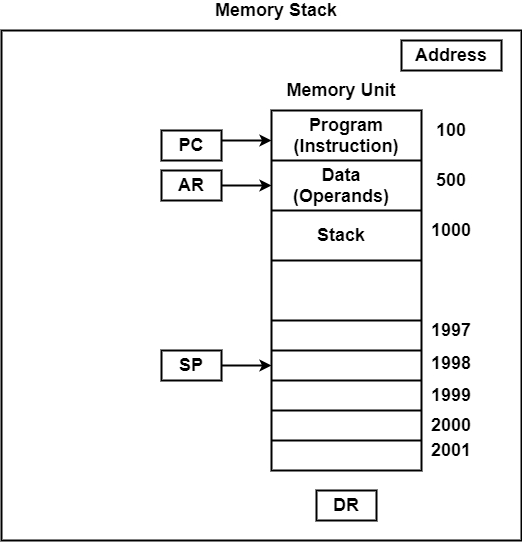
I will abstract a lot of the memory structure here, so read on knowing there will be inaccuracies. Think of memory as a building, each floor is a storage space, and a building only has so many floors. Each floor and groups of floors can have a different purpose, the basement is for parking, floor 1 is for the lobby, floor 2 is for a restaurant, and the rest are residential. Now think of the floors as space in memory. There are 3 main spaces in memory, the data, stack, and heap.
Diagram of Memory
| Memory Space | Description |
|---|---|
| Data | Is where data that don’t change are |
| Stack | Is where “local” variables are |
| Heap | Is where manually allocated space is |
The Data Memory Space
The data space will not be used in many beginner pwn questions, I don’t think I’ve ever encountered it. It also means that they don’t get deleted once a function is finished, these variables persist until the program dies. This means that nothing in the data space should change while the program is running. This would be things that are hardcoded into the language in use. For example, in C, the MAX_INT and MIN_INT variables dictate how much memory an integer takes up. Global and static local variables are stored in the data memory space. These variables don’t change during runtime, only from the source of the language or the program.
The Stack Memory Space
This is the part of memory that many beginner pwn questions will want you to attack. If you’ve ever went on stackoverflow.com, the stack in memory is where that name came from. “Stack overflow” attacks are a common way that CTFs question beginners. The stack is where variable in a function exists. This would include the main function. Stacks contains variables that the programmer defines the memory to. For example, int foo = 7; is the programmer dedicating 4 bytes of memory to foo. He is dedicating 4 bytes because by default in C, an integer is 4 bytes in length. Inside the 4 bytes, it would only store “7” though.
Probably more important than variables in the stack are the pointer and addresses in the stack. The stack pointer is not like pointers in C/C++. The stack pointer indicates where the program is while the program is running. This becomes very helpful while debugging. The Extended Instruction Pointer exists at the end of the stack execution, where it will look for the next instruction. This becomes useful when we do something called a “stack overflow,” where you overflow the whole stack and enter in the malicious instruction onto the original instruction pointer space. Later articles will further explain the stack. Essentially, if you overflow the stack, you can control the instruction pointer or other registers if the program isn’t secure.
The Heap Memory Space
The heap is, as mentioned, where the manually allocated buffers live. But what are buffers? Buffers are spaces in code that the programmer dictates. How is this different from declaring a variable in the stack? Stack variables can’t be resized during runtime, but buffers can. If I create a array in C, like this: int *p = malloc[100], I am dynamically assigning 404 bytes to the pointer p (0-100 integers, each int is 4 bytes). Confused? Me too! Stack variables have the life cycle of being declared, stored, and initialized during runtime. When the function ends, so do the variables in the stack.
The heap is more “floaty,” as in it exists in no particular order. Multiple buffers can live in memory without an order like stack variables do. The memory allocated is also decided by the programmer, not the compiler. Before I mentioned int takes 4 bytes of space, this is not a decision by the programmer but by the compiler. Compared to malloc[100];, the programmer specifies that he wants 404 bytes for this. The memory in the heap has to be deallocated as well, or freed. This means an insecure program could fill up the heap space quickly if memory is not deallocated.